FOMO in Trading: How to Stop Chasing Moves You Already Missed
You see a market rip higher without you. Your stomach tightens, and a voice says: "Get in now or miss the whole move." Ten minutes later you are in a trade you never planned, at the worst price of the day, with a stop you are not sure about. That is FOMO, the fear of missing out, and it is one of the most common reasons good traders break their own rules.
This article explains where FOMO comes from, why it hurts more on a prop account, and gives you a simple reset you can use in the moment plus habits that make the urge weaker over time.
What FOMO in trading really is
FOMO is not about the market. It is about a feeling: regret that someone else is getting a reward you are not. Your brain treats a missed move like a loss, even though no money left your account. To make that "loss" go away, it pushes you to act fast.
The trouble is timing. FOMO usually shows up after a move has already happened, when the easy part is gone and the risk of a pullback is highest. Chasing at that point means a wider stop, a worse price and a weaker reason for the trade.
Why FOMO costs more on a prop account
- Daily limits are tight. A chased trade with a wide stop can use a large share of a 3–5% daily drawdown in one go.
- Losses stack. The first chased trade often loses, which triggers a second "make it back" trade. That is how a FOMO trade turns into revenge trading.
- Rules get bent. Under pressure, traders size up, skip their checklist or trade sessions they normally avoid.
Common FOMO triggers
- Big green candles that appear while you were away from the screen.
- Social media screenshots of other traders' wins.
- A missed setup you planned but did not take.
- News headlines that make a move feel "obvious".
- A slow day with no trades, which makes any move look like your last chance.
The 4-step FOMO reset (use it in the moment)
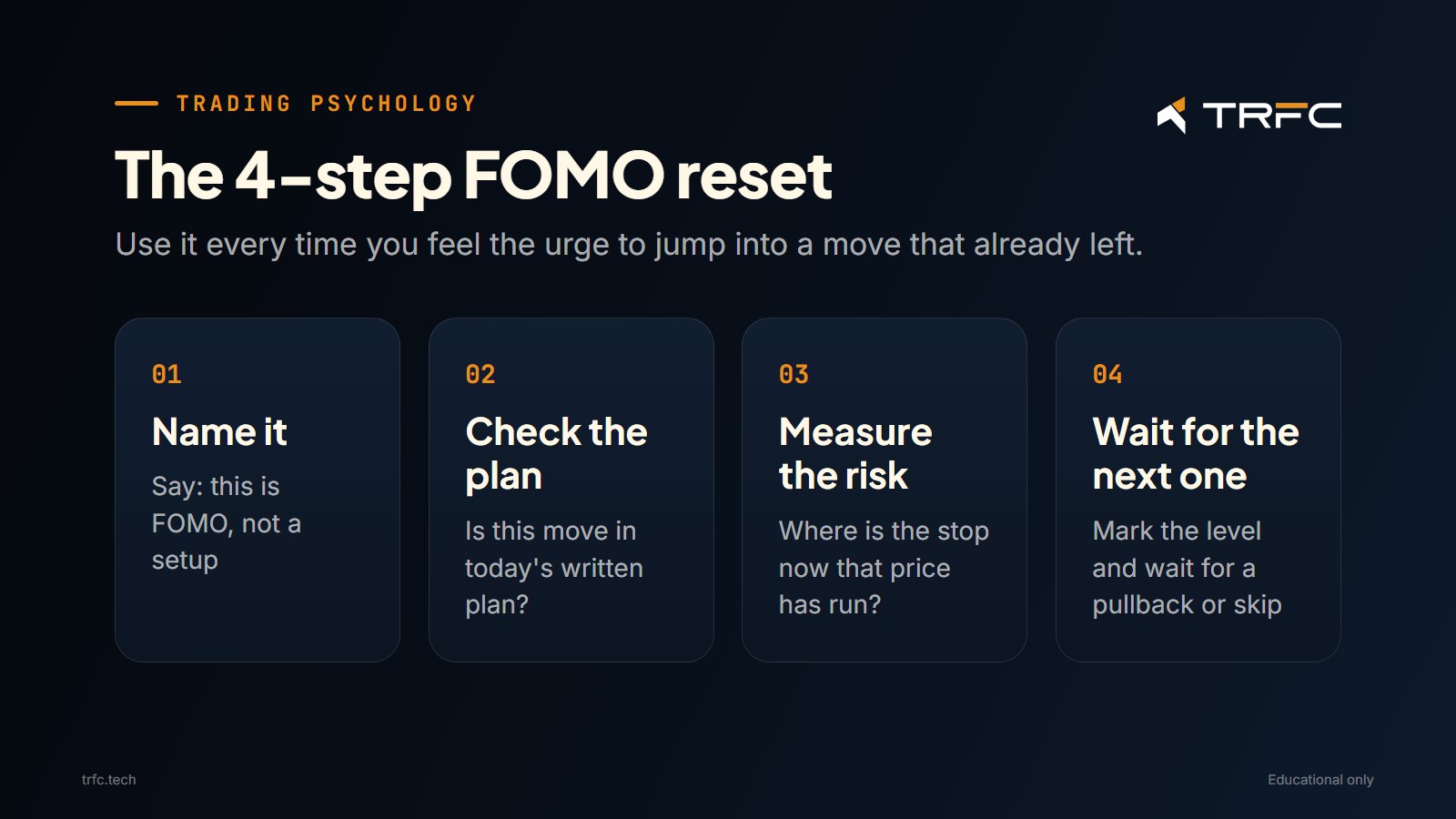
- Name it. Say it out loud or write it down: "This is FOMO, not a setup." Naming an emotion gives you a few seconds of distance from it.
- Check the plan. Is this market, direction and setup in today's written plan? If not, the answer is no.
- Measure the risk. Where would the stop go now that price has moved? Work out the size that keeps the loss inside your normal risk per trade. Often the honest answer is "too wide to make sense".
- Wait for the next one. Mark the level the move broke from and set an alert. If price comes back and shows a proper setup, you can trade it with a plan. If it never comes back, you lost nothing.
Habits that make FOMO weaker over time
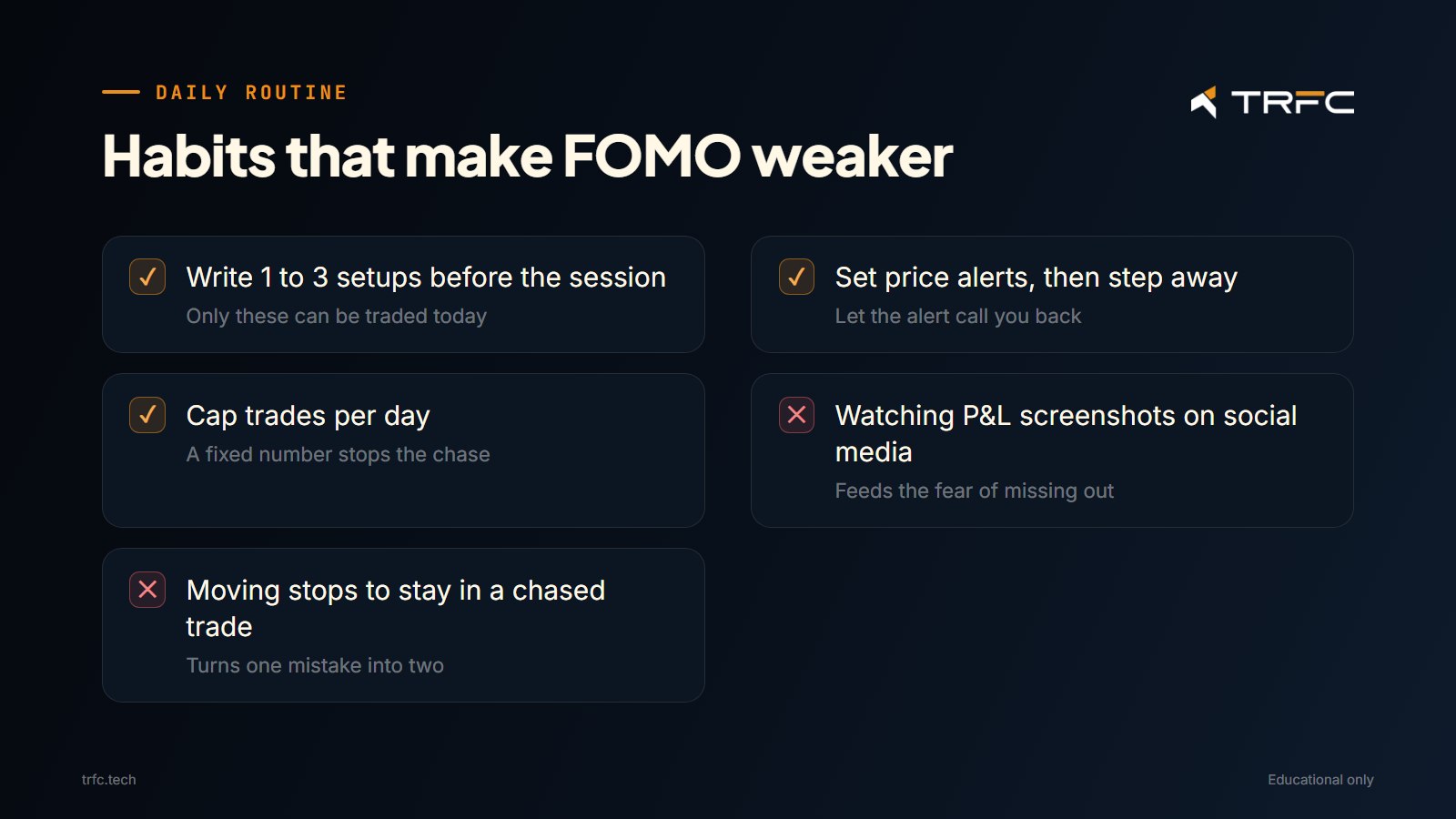
Write the day's setups before you start
Before the session, write one to three setups you are allowed to trade. Anything else is off the menu. It is much easier to say no to a move when the list is already on paper.
Let alerts watch the market for you
Staring at the screen makes every candle feel urgent. Set alerts at your levels and step away. When an alert fires, you arrive with a plan instead of a feeling.
Cap the number of trades
A fixed daily maximum, for example three trades, turns each trade into a scarce resource. You will spend it on good setups, not on chases.
Keep a "missed trades" list
Write down the moves you skipped and check them a week later. You will find that many would have failed, and that new chances appear every day. This weakens the "last chance" story your brain tells you.
Clean up your feed
Mute accounts that post profit screenshots during market hours. They show results, not the risk taken to get them.
What to do after a FOMO trade
If you do chase, do not make it worse. Keep the original stop, do not add to the position, and stop trading for the session if the loss hits your personal limit. Then log it in your trading journal: what triggered it, what you felt, and what rule would have stopped it. Patterns show up fast.
Practise calm decisions without the pressure
A prop challenge has no time limit at TRFC, so there is no reason to chase a target before a deadline. If you want to practise this routine on simulated funds, you can explore TRFC challenges or start with the free 30-day trial.
FAQ
What does FOMO mean in trading?
FOMO means fear of missing out. It is the urge to enter a trade because a market is moving without you, rather than because your plan says so.
Is it ever OK to enter after a big move?
Yes, if your plan includes a continuation setup and the risk still fits your rules. The problem is not entering late; it is entering without a plan.
How do I stop chasing trades?
Use a short pause routine (name it, check the plan, measure the risk, wait), write your setups before the session and cap your daily trades.
Does FOMO get better with experience?
It usually gets weaker as you see more missed moves that did not matter, but most traders keep simple rules in place because the feeling never fully disappears.
Educational only, not investment advice. TRFC evaluations use simulated accounts.