Process Goals vs Outcome Goals: How to Judge Your Trading Day
An outcome goal is a result you want, such as "make 8% this month". A process goal is an action you fully control, such as "risk no more than 0.5% per trade and log every trade". Traders who judge each day by process goals tend to stay calmer and more consistent, because they stop chasing a number the market decides.
This article explains why outcome goals backfire during a prop challenge, how to write process goals that actually work, and a simple scorecard to grade your day.
Why outcome goals backfire
There is nothing wrong with wanting to pass a challenge. The trouble starts when the target becomes the thing you look at every hour.
- You cannot control the result of one trade. A good trade can lose and a bad trade can win. Judging yourself by today's P&L teaches you the wrong lessons.
- Targets create urgency. "I need 3% this week" quietly turns into bigger positions, extra trades and moving stops: the habits that break daily loss limits.
- Your mood follows the balance. Up days feel like proof you are good, down days feel like proof you are not. Both lead to mistakes, from overconfidence after a big win to revenge trading after a loss.
Outcome goals vs process goals
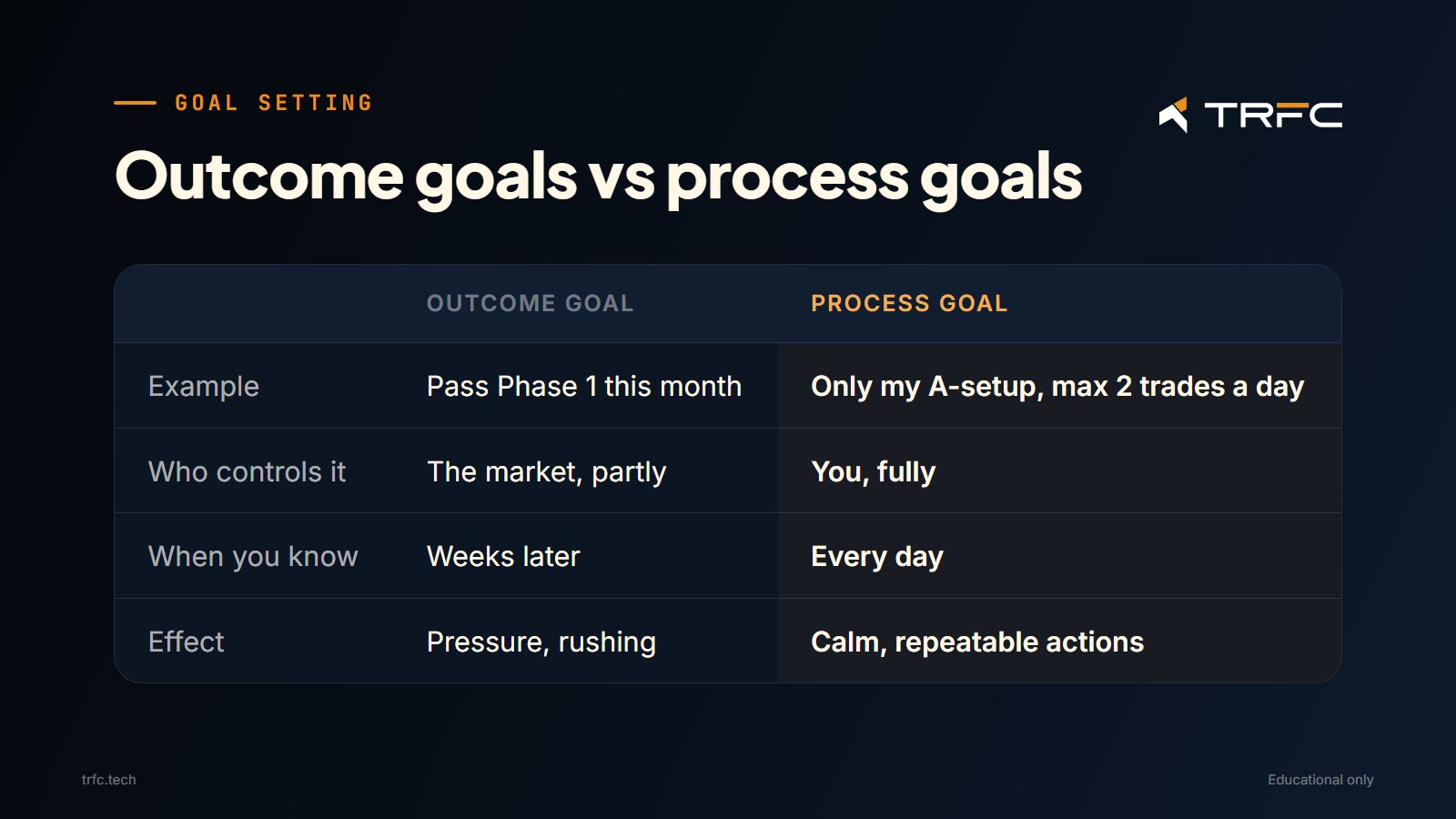
| Outcome goal | Process goal | |
|---|---|---|
| Example | "Pass Phase 1 this month" | "Only take my A-setup, max 2 trades a day" |
| Who controls it | The market, partly | You, fully |
| When you know if you hit it | Weeks later | Every day |
| Effect on behaviour | Pressure, rushing, oversizing | Calm, repeatable actions |
| Best use | Direction for the month | How you grade each day |
You still need an outcome goal to point you somewhere. The point is to set it once, then work on process.
How to write good process goals
A useful process goal is specific, within your control, and easy to check with a yes or no at the end of the day. Examples:
- Risk 0.5% or less per trade, set before entry.
- Trade only the setup written in my plan; no "extra" trades.
- Stop for the day after two losses or after reaching half of the daily loss limit.
- No new trades within 5 minutes of high-impact news.
- Log every trade with a screenshot and one line on why I took it.
Three to five goals are enough. More than that and you will stop checking them.
A daily process scorecard
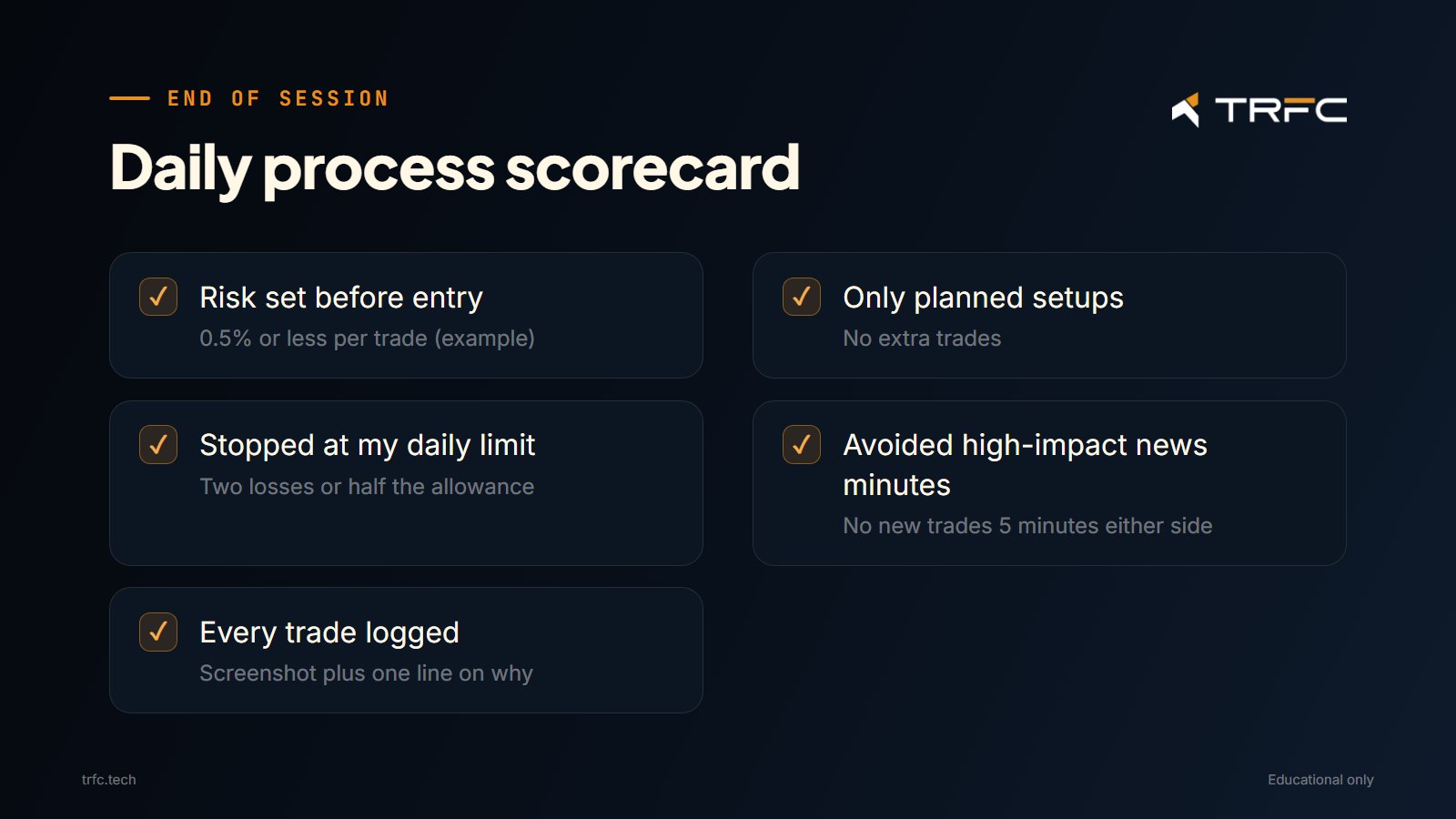
At the end of each session, give yourself one point for each goal you kept. A day with a small loss and 5/5 is a good day. A day with a profit and 2/5 is a warning, even if it feels like a win. Track the score in your trading journal next to the P&L, and after a few weeks compare the two columns: in most journals the high-score days cluster around the steady results.
Using process goals during a prop challenge
- Turn the target into a daily pace, then forget it. With no time limit on TRFC plans, there is no reason to rush the profit target.
- Protect the rules first. The daily drawdown and max drawdown end a challenge faster than a slow week ever will.
- Review weekly, not hourly. Once a week, look at your scorecard average and the balance together, and change one process goal at most.
Quick reset when you catch yourself chasing
- Close the P&L panel or minimise it.
- Read your process goals out loud.
- Ask: "Is my next trade on the plan?" If not, you are done for now.
A calm, repeatable process is what most evaluations reward. When you are ready to test yours, compare TRFC challenges or start with the free 30-day trial.
Educational only, not investment advice. TRFC evaluations use simulated accounts.