Stop Comparing Your Trading Results to Other Traders' Highlights
You open your phone after a small losing day and the first thing you see is someone's screenshot: a huge winning trade, a payout certificate, a "+12% this week" caption. Suddenly your own careful, small day feels like failure. That feeling is one of the quietest ways trading discipline breaks down, and it is worth understanding before it pushes you into trades you would never normally take.
Why other traders' results hit so hard
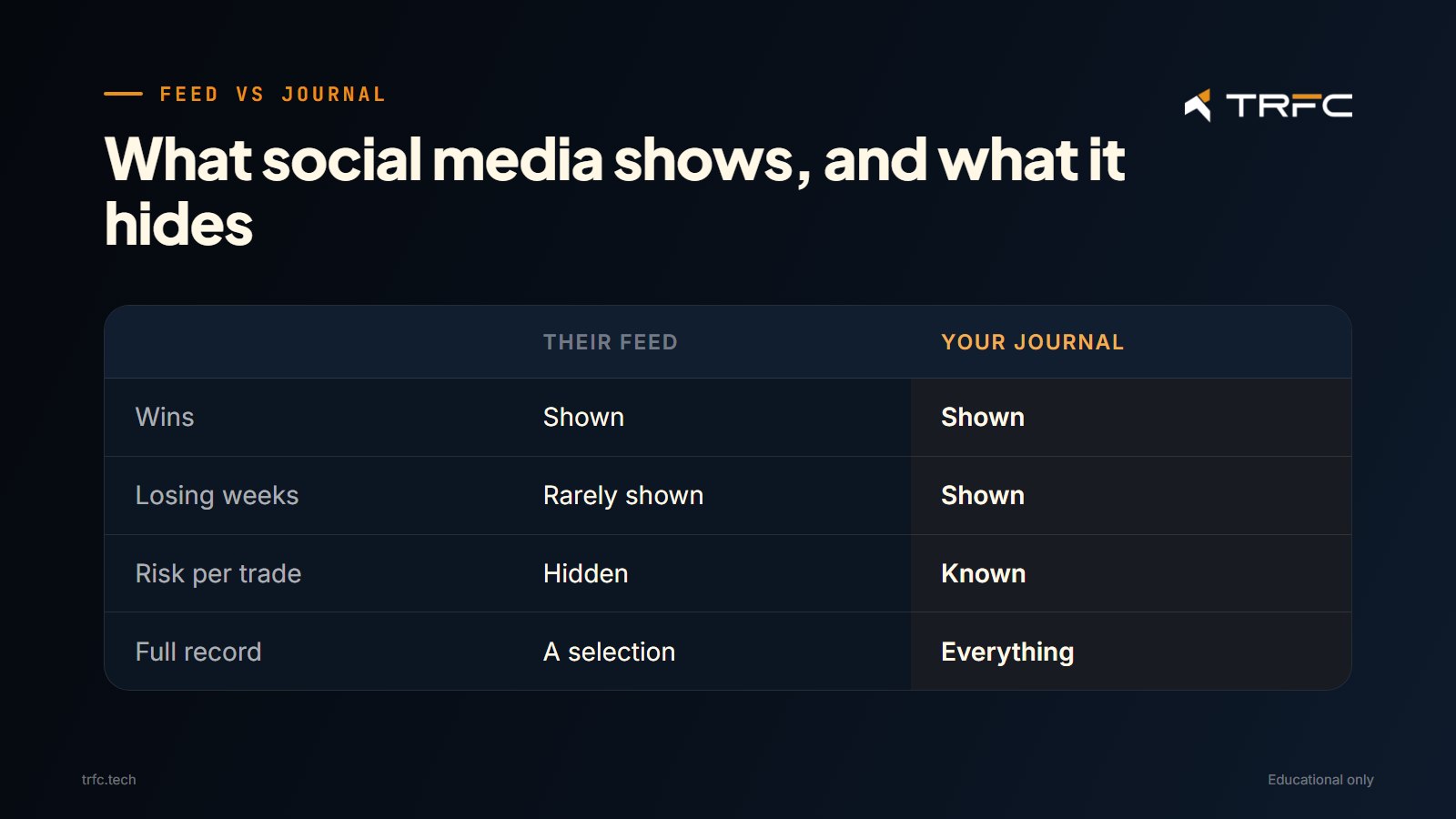
- You see the highlights, not the full record. People post wins. Losing weeks, blown accounts and long flat periods rarely make it to social media.
- You don't see the risk taken. A big percentage gain might come from a position size that could just as easily have wiped out the account.
- You compare your worst days to their best. Your journal shows everything. Their feed shows a selection.
- Different traders, different games. Their strategy, timeframe, account size and risk rules may have nothing in common with yours.
How comparison changes your trading
The problem is not the feeling itself. It is what traders do next. Common reactions include:
- raising risk per trade to "catch up";
- switching to someone else's strategy after one bad week;
- taking setups outside your plan because others are "making money on it";
- feeling that a normal, small profit is not worth logging.
Each of these moves you away from the process that gives your own results their edge.
Healthier ways to measure progress
Replace comparison with numbers you control:
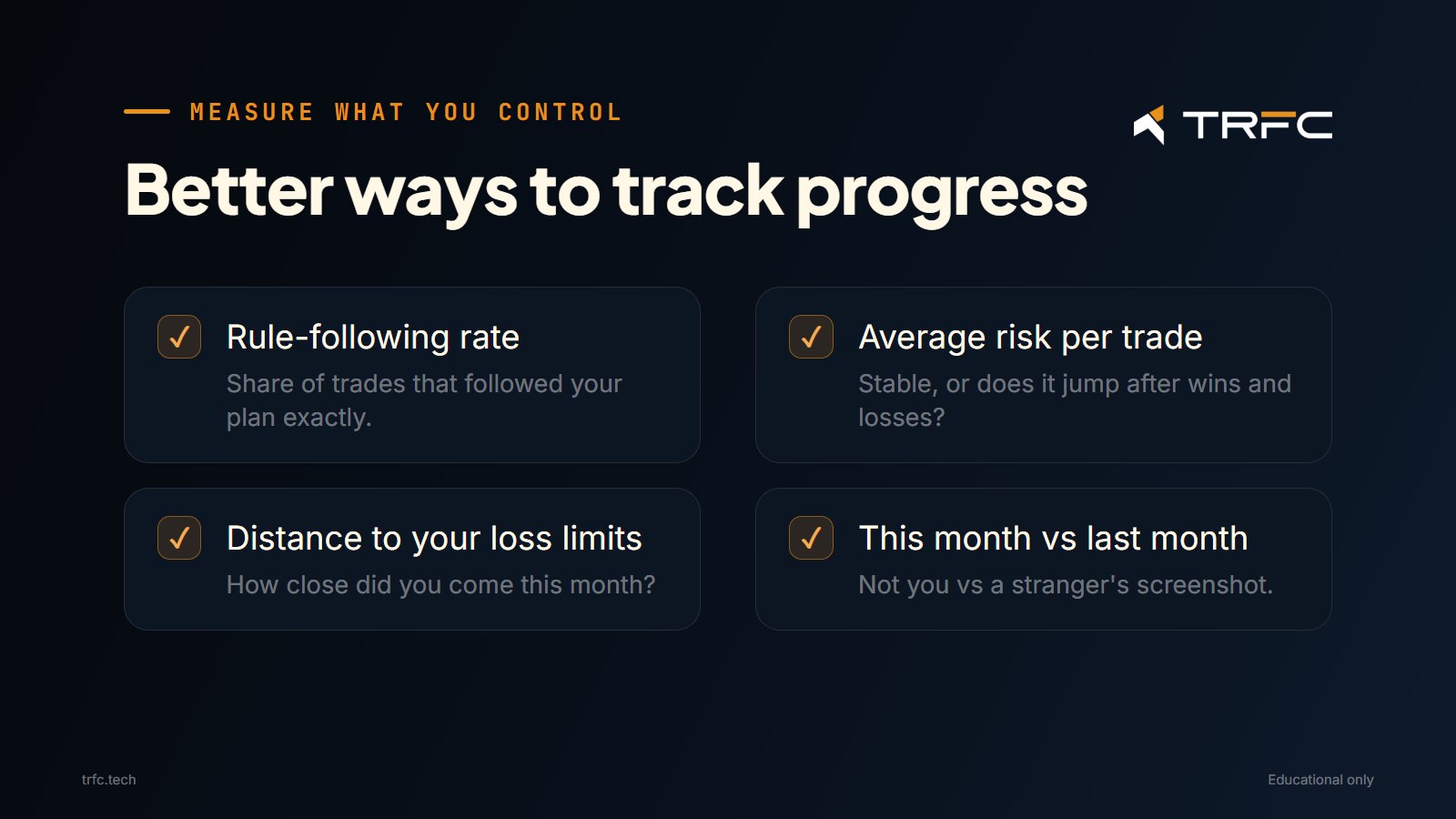
- Rule-following rate. What share of your trades this week followed your plan exactly? Aim to raise it over time.
- Average risk per trade. Is it stable, or does it jump after wins or losses?
- Distance to your limits. How close did you come to your daily and overall loss limits this month?
- Month-over-month, not trader-versus-trader. Compare this month's journal with last month's, not with a stranger's screenshot.
Practical habits to reduce the pull
- No social feeds during your session. Check them, if at all, after you have closed the platform and logged your trades.
- Curate what you follow. Keep accounts that teach process and risk; mute those that only post results.
- Write your own "why". One line on why you trade the way you do, kept next to your screen.
- Share your process, not just your P&L. If you post, post what you learned, which also reduces the pressure to post wins.
If a bad day after scrolling has ever turned into a string of rushed trades, our articles on handling a losing streak and overconfidence after a big win can help you reset.
A note for prop traders
In a prop challenge, the only comparison that matters is between your trading and the rules. Steady, rule-following days add up, and loss limits do not care how fast anyone else passed. If you want a structured place to build that habit, you can see how TRFC challenges work.
Key takeaways
- Social media shows other traders' highlights, not their full record or the risk behind it.
- The danger is the reaction: bigger size, new strategies, unplanned trades.
- Measure yourself against your own rules and last month's journal.
- Keep feeds away from your trading session.
Educational only, not investment advice. TRFC evaluations use simulated accounts.